How Insulin Sensitivity Shapes Postpartum Weight Loss
Postpartum weight loss is often framed as a matter of “willpower” or “bouncing back.” But, biology plays a far bigger role than most new parents are told. One of the most important—yet overlooked—factors is insulin sensitivity.
Insulin is a hormone that helps move glucose from your bloodstream into your cells for energy. When your body is insulin sensitive, it does this job well. When you’re insulin resistant, glucose builds up in the blood, your body compensates with higher insulin levels, and fat storage is promoted.
During the postpartum period, insulin sensitivity is in flux. Sleep deprivation, stress, hormonal changes, and nutritional patterns all play a role in how your body regulates weight. The good news? With compassionate strategies that blend science and self-care, you can support your metabolism while also caring for your emotional well-being.
What Affects Insulin Sensitivity Postpartum?
1. Sleep Disruption
Sleep is one of the strongest regulators of insulin sensitivity. Even short-term sleep loss reduces how effectively insulin works.¹ For new parents, disrupted sleep is nearly universal—so if weight loss feels harder, it’s not “just you.” Your biology is responding to exhaustion.
2. Stress and Cortisol
Chronic stress elevates cortisol, a hormone that raises blood sugar and promotes fat storage, especially around the abdomen.² But cortisol also affects body image. Higher stress levels are associated with more negative body perception, which can lead to restrictive dieting or emotional eating. This creates a feedback loop: stress → poor body image → erratic eating → more stress.
3. Nutrition
Dietary patterns play a key role. Research consistently shows that plant-rich diets—emphasizing vegetables, whole grains, legumes, nuts, and seeds—support insulin sensitivity and reduce the risk of type 2 diabetes.³,⁴ Fiber, polyphenols, and plant proteins all improve glucose regulation.
4. Physical Activity
Movement helps muscles take up glucose independently of insulin, improving sensitivity.⁵ Even short walks after meals can make a measurable difference.⁹
The Cortisol–Body Image Loop
Let’s pause to go deeper into the stress-body image connection.
Postpartum is a season of profound identity change. Elevated cortisol not only drives metabolic shifts but also amplifies negative self-talk. Research links stress and poor body image with disordered eating patterns and weight cycling. When you feel “behind” on weight loss, cortisol rises further, creating a vicious cycle.
This is why self-compassion is not a luxury—it’s a metabolic tool. Treating yourself with patience lowers cortisol, stabilizes blood sugar, and improves your ability to make nourishing choices.
Practicing Self-Compassion in Postpartum Nutrition
Self-compassion doesn’t mean giving up on goals. It means shifting the way you pursue them: with curiosity instead of criticism.
- Reframe the goal: Instead of “I need to lose this weight,” try “I want to nourish my body so I can feel strong and steady.”
- Name the season: Remind yourself: healing comes first. Weight changes are a byproduct of healthier habits, not the main goal of postpartum.
- Use compassionate accountability: Check in with yourself daily: not “Was I perfect?” but “Did I care for myself in a way that honors my needs and worth as recovering mama?”
Research shows that self-compassion reduces stress eating and increases sustainable health behaviors. It turns out that kindness toward yourself is metabolically efficient.
Nutrition Strategies to Support Insulin Sensitivity
1. Prioritize Fiber-Rich Carbs
Whole grains, beans, lentils, fruits, and vegetables all slow glucose release. Fiber not only improves insulin sensitivity but also feeds the gut microbiome, which plays a role in metabolic health.⁵
Meal ideas:
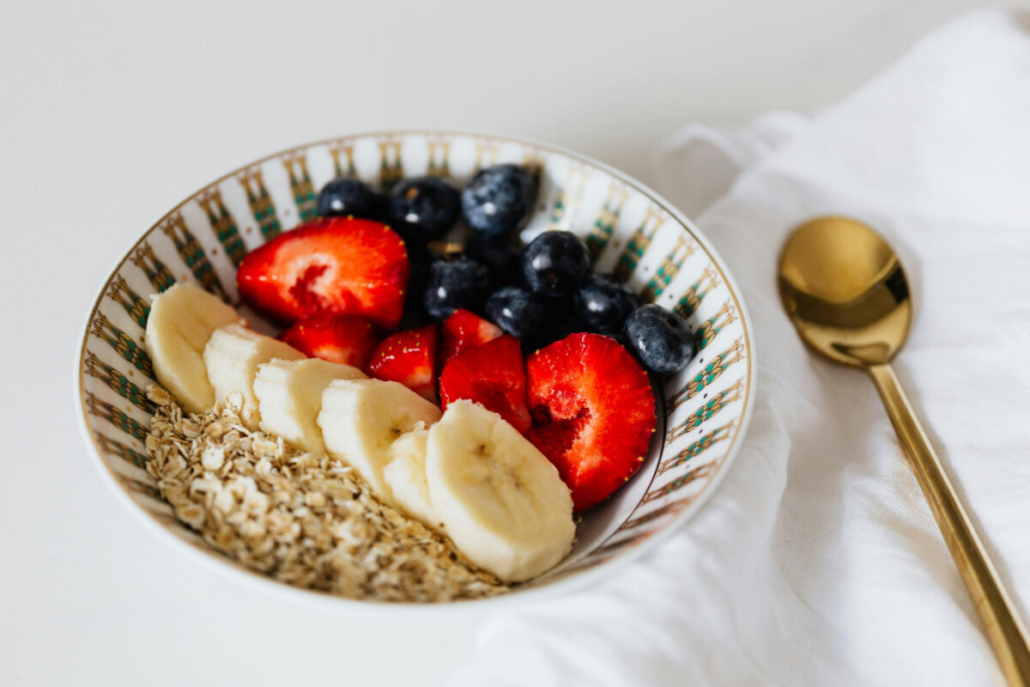
- Oatmeal topped with chia seeds or zen basil seeds, walnuts, and berries
- Quinoa, chickpea, and salmon salad with arugula and lemon-tahini dressing
2. Include Plant and Animal Proteins
Both plant and animal proteins help regulate blood sugar. Studies show plant proteins (like beans, lentils, and tofu) are just as effective as animal proteins for glucose control.⁷
Meal ideas:
- Salmon with roasted sweet potatoes and broccoli
- Lentil stew with diced turkey and whole-grain bread topped with smashed avocado
3. Add Polyphenol-Rich Foods
Polyphenols—found in berries, green tea, dark leafy greens, and spices—reduce inflammation and improve insulin responsiveness.⁶
Snack idea:
- Green tea with a handful of almonds and blueberries
4. Embrace Healthy Fats
Monounsaturated and polyunsaturated fats (olive oil, avocados, nuts, seeds) improve insulin sensitivity and satiety.⁸
Meal idea:
- Avocado toast with pumpkin seeds and tomato slices
5. Balance Meals, Don’t Restrict
Instead of cutting carbs entirely (a common myth), balance them with protein, fiber, and fat. Research shows that quality matters far more than quantity when it comes to carbs.¹⁰
Meal idea:
- Brown rice with stir-fried vegetables and tofu or scrambled egg cooked in sesame oil and topped with crushed salted cashews
Lifestyle Strategies Beyond Food
Gentle Movement
Aim for short walks after meals. Even 10–15 minutes makes blood sugar more stable.⁹ Yoga and resistance training also improve insulin sensitivity while lowering stress.
Stress Care
Simple practices like deep breathing before meals, journaling, or asking for support with childcare can reduce cortisol. Remember, lowering stress is as impactful as changing what’s on your plate.
Sleep (as Possible)
You may not get 8 hours straight, but naps, alternating shifts with a partner, or practicing good sleep hygiene can make a difference. Even partial improvements in sleep improve insulin sensitivity.¹
Myth-Busting: Insulin, Weight, and Carbs
- Myth: You need to cut all carbs to lose weight postpartum.
Fact: The data show that quality of carbs matters far more than cutting them entirely. Whole-food, plant-rich carbs support insulin sensitivity and long-term weight stability.¹⁰
- Myth: Postpartum weight loss is only about calories.
Fact: Hormonal shifts, sleep, and stress all influence how calories are processed. Supporting insulin sensitivity helps your body use energy more efficiently.
- Myth: Being self-critical keeps you motivated.
Fact: Studies show that self-compassion, not shame, leads to more consistent health behaviors and better long-term outcomes.
Closing Thoughts
If weight loss feels harder postpartum, it’s not because you’re failing—it’s because your biology is adapting to a demanding season. Insulin sensitivity is one of the key players in this story. By supporting it with plant-rich nutrition, gentle movement, stress care, and self-compassion, you’re not only improving metabolism but also nurturing your whole self.
Healing after birth isn’t about restriction or rushing—it’s about creating stability, regulation of energy and emotions without using food to cope, and of course, balance. When you care for your body with compassion and evidence-based strategies, weight loss becomes less about pressure and more about partnership with your physiology.
Work with Lizzy Swick Nutrition to help you connect the dots and establish healthy habits to help enhance your recovery postpartum and achieve your body composition goals. If you don’t know where to start, reach out to Lizzy today.
References
- Benedict C, Cedernaes J. Sleep and metabolism. Curr Opin Clin Nutr Metab Care. 2018;21(4):294–8.
- Rosmond R. Role of stress in the pathogenesis of the metabolic syndrome. Med Sci Monit. 2005;11(2):RA35–8.
- Hawley JA, Lessard SJ. Exercise training–induced improvements in insulin action. J Appl Physiol (1985). 2008;105(3):779–85.
- Satija A, Bhupathiraju SN, Rimm EB, Spiegelman D, Chiuve SE, Borgi L, et al. Plant-based dietary patterns and type 2 diabetes incidence in US men and women: results from three prospective cohort studies. PLoS Med. 2016;13(6):e1002039.
- Valdes AM, Walter J, Segal E, Spector TD. Role of the gut microbiota in nutrition and health. BMJ. 2018;361:k2179.
- Chai SC, Davis K, Wright RS, Kuczmarski MF, Zhang Z, Beydoun MA. Dietary flavonoid intake and cardiovascular risk factors in the Framingham Offspring Cohort. J Nutr. 2013;143(9):1488–98.
- Venn BJ, Mann JI. Cereal grains, legumes and diabetes. Br J Nutr. 2004;92(Suppl 3):S61.
- Schwingshackl L, Hoffmann G, Lampousi AM, Knüppel S, Iqbal K, Schwedhelm C, et al. Food groups and risk of type 2 diabetes: systematic review and meta-analysis. BMJ. 2017;356:j610.
- DiPietro L, Gribok A, Stevens MS, Hamm LF, Rumpler W. Activity, fitness and insulin resistance: insights from the Insulin Resistance Atherosclerosis Study. Diabetes Care. 2013;36(2):421–8.
- Hu FB, Malik VS. Questioning the role of plant-based diets in mitigating climate change. Lancet. 2018;391(10128):231–2.

